

The shoulder is the most moveable joint in the body, and is able to perform over 10 different anatomical movements. There are 17 muscles which control the movement of the scapula (shoulder blade), and ‘the shoulder’ itself is made up of three individual joints- acromioclavicular, scapulothoracic, and glenohumeral joints.
Many people get shoulder mobility and shoulder flexibility confused with one another. Shoulder flexibility is the ability of muscles to temporarily stretch and elongate. Shoulder mobility is the ability of the shoulder joints to move through a range of motion with control, without becoming restricted. Mobility requires having the appropriate strength, co-ordination, body awareness and flexibility in order to complete a movement.
It is important to maintain good mobility in all of your joints, but particularly so with the shoulder being one of the most freely able to move. Without full mobility you predispose yourself to injury, not only in the shoulder, but neighbouring joints also. When shoulder mobility is restricted, your elbow and neck will try to compensate for the limitations, putting them at an increased risk of injury. Rotator cuff tears and shoulder impingement are the two most likely conditions to arise from poor shoulder mobility. The best way to improve your shoulder mobility includes a combination of foam rolling, dynamic stretching, strength training, and static stretching.
5 exercises to improve shoulder mobility
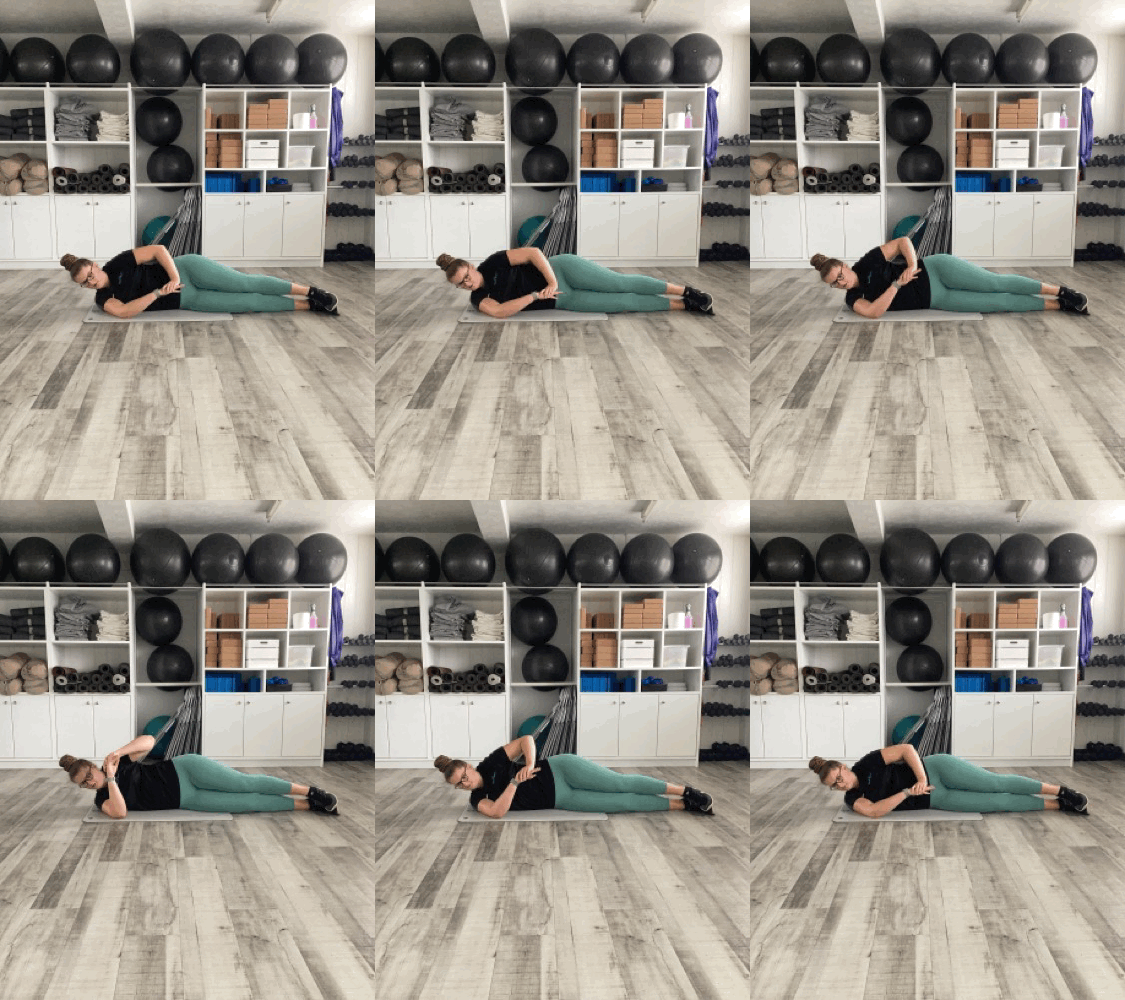
Sleeper stretch
Lie on your affected side with your shoulder stacked underneath you. You can use a pillow under your head. Bring your elbow straight out from your shoulder.
Bend your arm at the elbow so your fingers are pointed toward the ceiling. Keep your arm bent in this L position. Use your other hand to push your forearm down toward the floor.
Press as far down as you comfortably can. You’ll feel a stretch in the back of your shoulder, arm, or upper back. Hold for 10-15 seconds
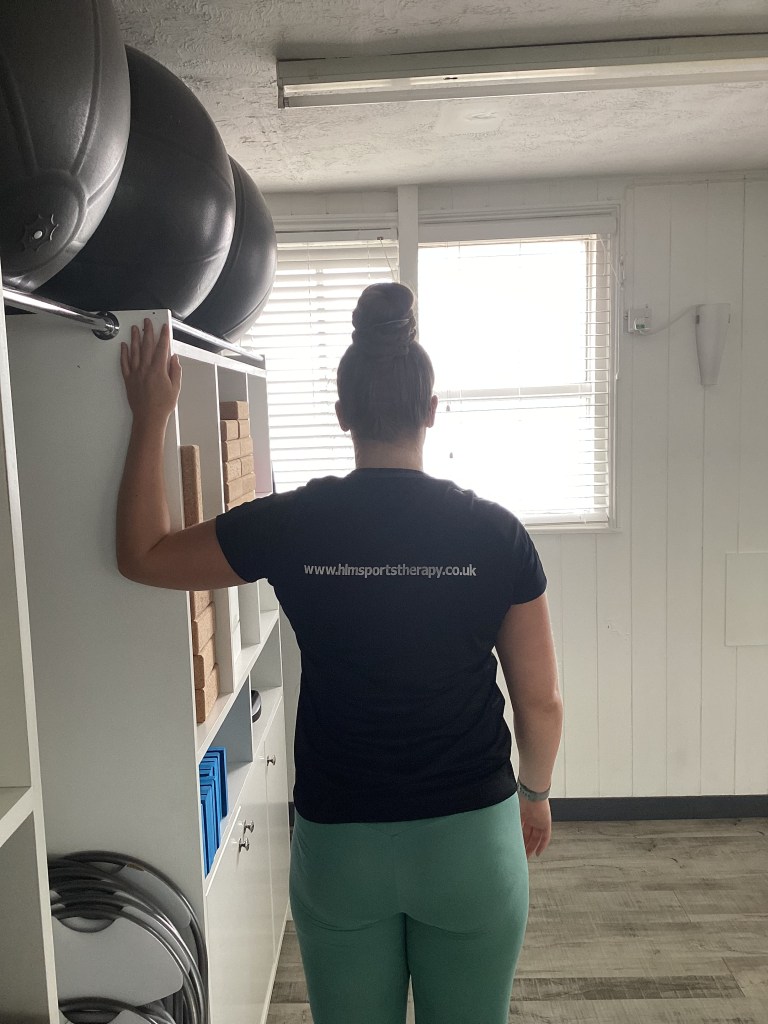
Door frame chest stretch
Stand in an open doorway and place your forearm vertically on the doorframe. Lean forward until you feel a stretch through your chest.
Hold the stretch for 30 seconds.

Wall angel
Stand with your feet a few inches from a wall. Place your arms at shoulder level, with your elbows bent. Slide your elbows up the wall as far as feels comfortable, and then back down as far as is comfortable.
Hold for up to 10 seconds at each end of range
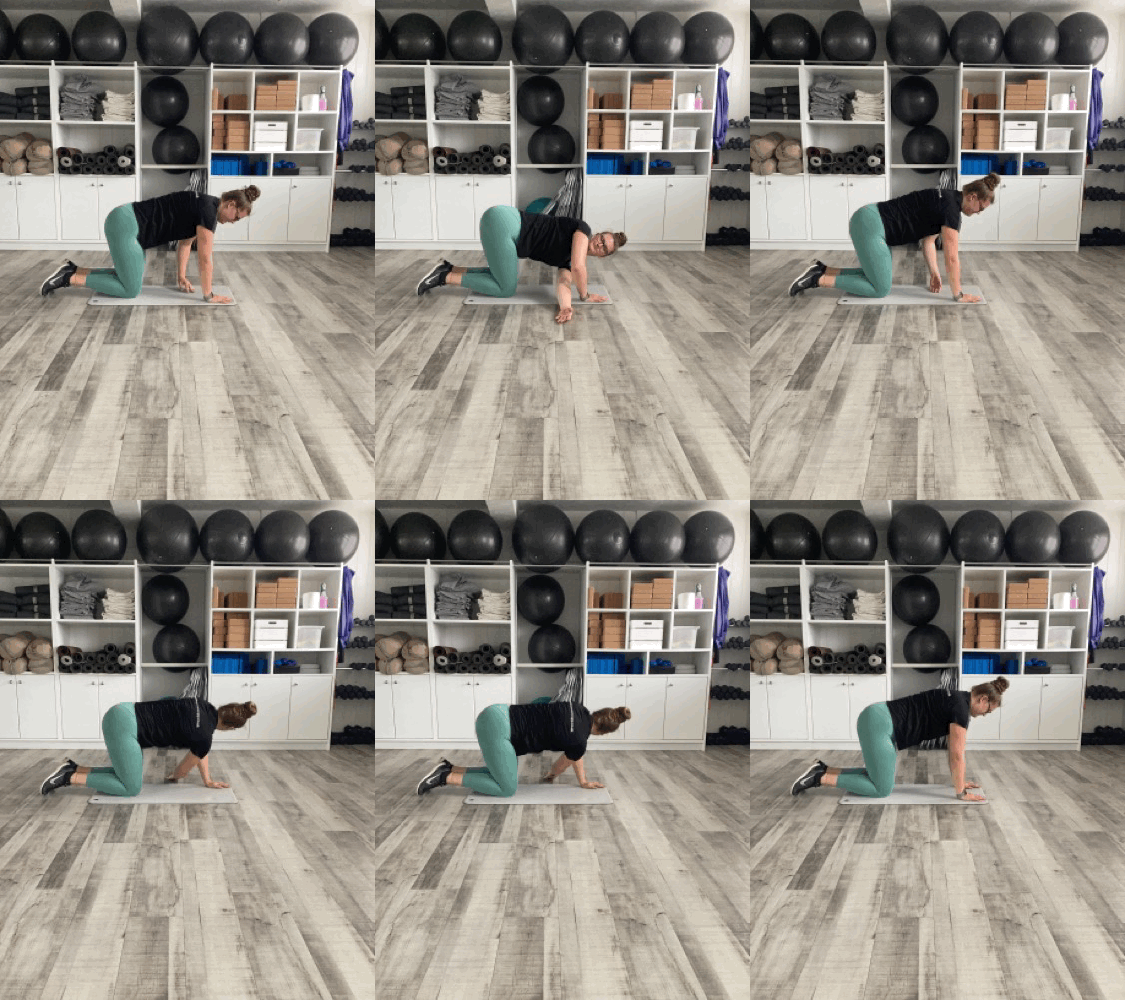
Thread the needle
Start on all fours in a neutral table-top position (Shoulders over wrist, and hips over knees) Tuck in your chin and make sure your back is flat.
Hold your weight on your right hand and guide your left arm underneath your right, as though the moving arm is threading a needle.
Twist your spine whilst keeping your lower back and hips still as your reach your left arm further into the stretch. Allow your shoulders and head to drop down so that your left shoulder and ear rest on the floor.
When you feel the stretch hold for 5-10 seconds and return to the starting position

Overhead banded pull aparts
Hold the band straight above your head.
Pull the band apart as your lower your arms to shoulder height, pressing your hands out to the sides.
Hold this position for a few seconds.
Slowly return to the starting position, aiming to keep your shoulder blades down, away from your ears.
This blog post is not designed to replace a full assessment from qualified healthcare professional, and outlines just a few ways in which you can improve your shoulder mobilty at home. If you would like to discuss your own shoulder mobility, injury, or to book an appointment, contact us.
 HLM Sports Therapy