
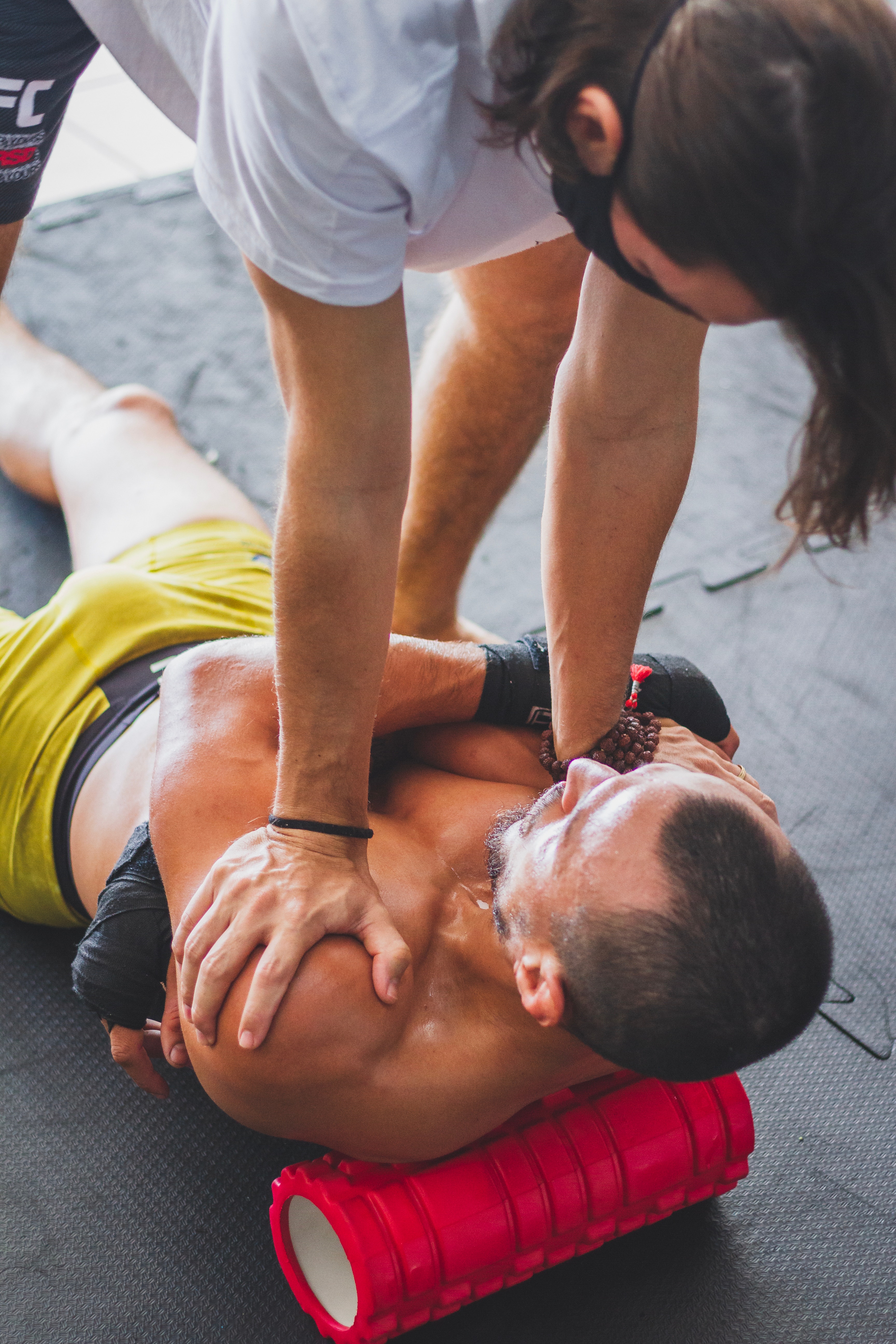
Foam rolling has become more popular in recent years, but do you know what it is, how it can benefit you, or how to foam roll effectively? In this weeks blog post we will discuss it all!
A foam roller is traditionally a smooth, lightweight cylinder made from compacted foam. In recent years textured rollers have been developed to allow for different intensities of use- more texture means more work is being done to your muscles! People use a foam roller to release areas of tightness in muscles and increase mobility by rolling over different parts of the body- in technical terms this is known as myofascial release.
But what is your fascia and why does it need releasing?
Fascia is a thin layer of connective tissue which covers every muscle in your body and connects them to one another. In order for your soft tissues to function efficiently, the fascia is flexible, and will glide smoothly over your muscles. However, adhesions can form in the fascia, causing it to no longer work efficiently. These can be caused by a number of factors including inactivity, poor posture, and injury. These adhesions need to be broken down to restore optimal function to the fascia, which as we discussed earlier, is known as myofascial release and can be achieved using a foam roller.
It is a common misconception that foam rolling is only for athletes. Initially foam rollers were being used exclusively among this group, however in recent years foam rolling has become a common part of the lives of every day people around the world. Foam rolling can be beneficial to anyone who is experiencing acute stiffness or tightness, regardless of physical activity levels.
The benefits of foaming rolling don’t just stop at reliving muscular tightness and discomfort, other possible benefits of foam rolling include:
- Improved joint mobility
- Corrects muscle imbalances and improves postural control
- Prevent injury and improve performance
- Activating inactive muscles
- Can boost your immune system- When your fascia is tight and restricted, the lymphatic system is unable to work efficiently and remove toxins from your body
So where should you foam roll and how do you do it?
It can be tricky to know what areas of your body would benefit from foam rolling. Not all the areas of the body need to be rolled in equal amounts, in order to feel the most benefit, foam rolling should be completed based on your individual needs.
The areas which foam rolling should target can be identified in several ways:
- Palpation- feeling for areas that feel tight- these areas are often described as “knots”
- Areas which were tender during previous foam rolling sessions
- Areas which have historically been tight and tender
- Activity specific- foam roll muscles which are used during your sport/activity (e.g. Hamstring, quadriceps and calves for runners)
When foam rolling is completed properly, it is likely to feel uncomfortable. Think of foam rolling as an at-home alternative to a deep tissue massage- most of the time patients will experience some discomfort during treatment. In the simplest way, foam rollers are a tool used to substitute the hands, elbow and forearm of a sports or massage therapist. As soon as you move off the foam roller, the discomfort you were feeling should stop. If discomfort begins to subside whilst still using the foam roller, it means you have begun to re-lengthen the fascia.
To help you get the most out of your foam roller, we’ve put together some top tips to get the most out of your sessions:
- Slowly roll each targeted muscle for 2-3 minutes
- When you find a particularly tight/tender area, hold the position for up to 30 seconds- the discomfort should start to ease
- Try to relax whilst using your foam roller
- If you find an area which is too uncomfortable to roll, work on the muscles surrounding it. This will help to relieve the whole area
- Foam rolling will help to release lactic acid from your muscles, keep yourself well hydrated for 24 hours after rolling
- It is normal to feel a little sore or tender the day after a foam rolling session. If this happens, wait for the tenderness to subside before rolling again
These are just a few ways in which a foam roller can aid your wellbeing. This blog post is not designed to replace a complete medical assessment If you have any question or queries, contact us.
 HLM Sports Therapy